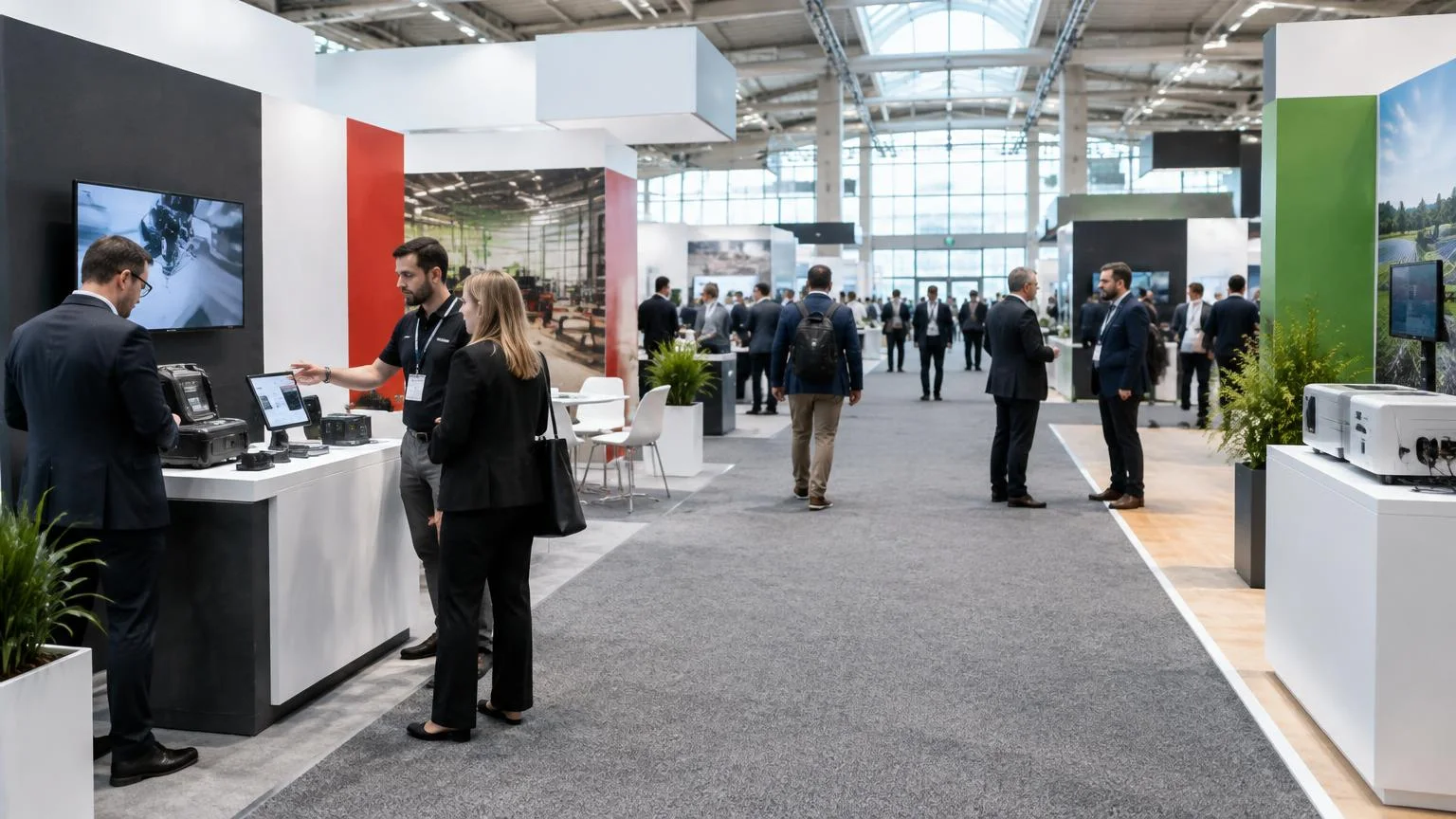
Outsourced exhibit sales assigns agreed booth and related commercial selling activities to an external sales team. A trade show organizer still owns its event, floor plan, inventory rules, pricing approvals and exhibitor fulfillment. The partner’s value comes from finding relevant exhibitors, qualifying their objectives, managing proposals and keeping an accurate sales pipeline—not from promising to fill every square foot.
Exhibit sales differs from sponsorship selling because the product includes physical location, space, availability and operational constraints. A relevant exhibitor may want a particular booth category or adjacency that cannot be supplied. Commercial success therefore requires close coordination between sales records and the organizer’s authoritative inventory, even when the selling work is outsourced.
Segment exhibitors by commercial fit
Start with the event audience and the problems exhibitors help that audience solve. Product categories, target customer roles, geography and buying context can be more useful than a broad industry list. Distinguish companies seeking new buyers from those focused on distribution, education, recruitment or relationship retention.
Then separate incumbent exhibitors, lapsed accounts, new prospects and organizations that attended without exhibiting. Each group needs a different conversation. An incumbent can discuss prior experience; a new prospect needs evidence of audience relevance and clear expectations about participation.
Competitor exhibitor lists can suggest categories for research, but appearance at another show does not prove budget or fit for yours. Verify current products, target markets and partnership priorities before treating an account as qualified. Cvent’s sponsorship guidance is useful for audience-and-objective alignment, although physical exhibit inventory adds constraints beyond a sponsorship package.
Protect inventory truth
The floor plan, booth sizes, categories, availability, placement rules and pricing must have an agreed source of truth. A CRM opportunity is not a reservation. Specify who can place a hold, how long it lasts, what makes it binding and how cancellation is recorded.
Salespeople should know which benefits are included and which require separate purchases. Clarify service charges, access deadlines and any exhibitor requirements through organizer-approved materials. Do not allow improvised promises about neighboring exhibitors, attendee traffic, lead volume or production support.
If the sales team does not operate the floor-plan system, establish a documented availability check before every proposal and contract. Clear commercial coordination is different from managing floor-plan operations. SCE handles agreed sales activities; exhibition production, fulfillment and floor-plan operations are not included unless separately contracted.
Rebooking and new acquisition need different pipelines
Rebooking starts with a grounded review of the exhibitor’s objectives and experience. Ask what it intended to achieve, what happened and what should change. Avoid assuming that attendance or badge scans alone demonstrate value. Unresolved fulfillment concerns should be addressed before an aggressive renewal pitch.
New acquisition requires category research, qualification and often education about the event. Sellers need to explain audience fit, available inventory and the commercial use case. Treating every new company as ready for a booth quote can inflate the pipeline with weak opportunities.
A useful model is to keep separate acquisition and retention views while using consistent stage definitions. Leadership can then see whether the show’s outlook relies on existing accounts returning, new accounts converting or larger packages being sold. These are distinct sources of revenue and risk.
A stage-gate exhibit sales workflow
This is a suggested planning framework. Adapt the stages to your contracting and payment process rather than treating them as a universal industry standard.
| Stage | Evidence required to advance | Commercial owner | Inventory check |
|---|
| Researched | Verified category and audience relevance | Research / sales | Suitable booth types exist |
| Qualified | Buyer objective, timing and relevant decision process | Seller | Budget and space needs broadly align |
| Discovery complete | Specific participation needs understood | Seller | Placement constraints reviewed |
| Proposal | Approved quote and next decision documented | Seller | Availability confirmed by organizer |
| Negotiation | Active buyer discussion on terms | Commercial lead | Holds and concessions authorized |
| Contracted | Agreement meets organizer's acceptance rules | Authorized signatory | Allocation formally recorded |
| Handoff | Fulfillment receives accurate commitments | Client fulfillment owner | Operational deadlines communicated |
Record a next action and date at every stage. A quote that has not been discussed with a buyer is different from an active negotiation. “Contracted” should not be presented as “collected” until the organization’s finance records confirm payment.
Suggested operational KPI table
Use these measures to diagnose the process; no benchmark values or performance promises are implied.
| Measure | What it reveals | Interpretation caution |
|---|
| Qualified new exhibitors by category | Coverage of commercially relevant segments | More accounts do not guarantee conversion |
| Rebooking decisions outstanding | Exposure in incumbent revenue | Distinguish undecided from declined |
| Proposal age and next-action completeness | Follow-up discipline | Some buyers have legitimate longer cycles |
| Contracted booth revenue | Accepted commercial commitments | Not identical to cash collected |
| Available / held / contracted inventory | Remaining sellable capacity | Reconcile to the authoritative floor plan |
| Expansion from booth to sponsor benefits | Cross-sell activity | Check delivery cost and benefit availability |
Weekly reporting should connect these measures to decisions. A category with strong buyer conversations but limited suitable space may need an inventory discussion. Many old proposals with no next step may need qualification cleanup, not more outreach.
AI-assisted mapping and sponsor enhancements
Research assistance can help build an exhibitor universe, classify companies and prepare summaries. Humans should verify sources and review fit. A tool-generated company description may be outdated; an account's presence in a category does not establish interest in exhibiting.
Once a booth prospect’s objectives are understood, relevant sponsorship enhancements can be considered: an approved thought-leadership placement, branded lounge or targeted visibility asset may complement exhibiting. Do not attach arbitrary extras simply to raise the quote. Review availability, delivery obligations and audience relevance through a package value framework.
Outsourcing versus an internal exhibit sales team
Internal teams may provide deep event knowledge and close coordination with operations. External teams may add research capacity, specialized commercial experience or coverage for an underserved segment. Both require accurate inventory, sponsor evidence and timely approvals.
Compare equivalent responsibilities, not just fees. Determine whether the provider handles acquisition, renewals, expansion or all three. Name the person responsible for reconciling sales and inventory. Review commissions on incumbent accounts, excluded relationships, collections and cancellations before work begins.
The outsourced sponsorship sales guide discusses delivery-model tradeoffs, while the sales timeline connects prospecting to proposal, contract and handoff deadlines.
Buyer questions
Does an exhibit sales partner run the exhibition?
Not by default. Commercial sales, production, floor-plan administration, exhibitor services and fulfillment are separate responsibilities. Specify any additional contracted work rather than assuming it is included.
How should revenue be forecast?
Use stage evidence, documented buyer timing and accurate inventory. Separate contracted, invoiced and collected amounts. If probability assumptions are used, label and calibrate them rather than presenting them as certainty.
Should new-account sellers also manage renewals?
They can, if scope and capacity allow. Retention and acquisition require different context, so monitor both and avoid leaving renewal concerns unresolved while chasing new business.
Align selling with the event you can deliver
Booth revenue depends on commercially relevant exhibitors, credible audience value and inventory discipline. Outside capacity can support those activities, but cannot replace accurate floor-plan records or organizer accountability. Discuss a defined exhibit sales mandate through SCE’s Managed Sponsorship Sales engagement.